Medical Chronology Essentials: How Timelines Strengthen Case Strategy
Medical records serve as foundational evidence in personal injury, medical malpractice, workers' compensation, mass tort litigation, and other complex matters. When records span multiple providers and long periods, the case depends on clarity. A medical chronology brings structure to these records by presenting events in a clear, sequential timeline that strengthens analysis, strategy, and communication.
Introduction: The Importance of Medical Timelines in Legal Strategy
Medical records are built for clinical care, not litigation. They often rely on abbreviations, reference prior visits, and scatter critical information across dozens or hundreds of documents. For legal teams, that format makes it difficult to understand the medical story quickly or accurately.
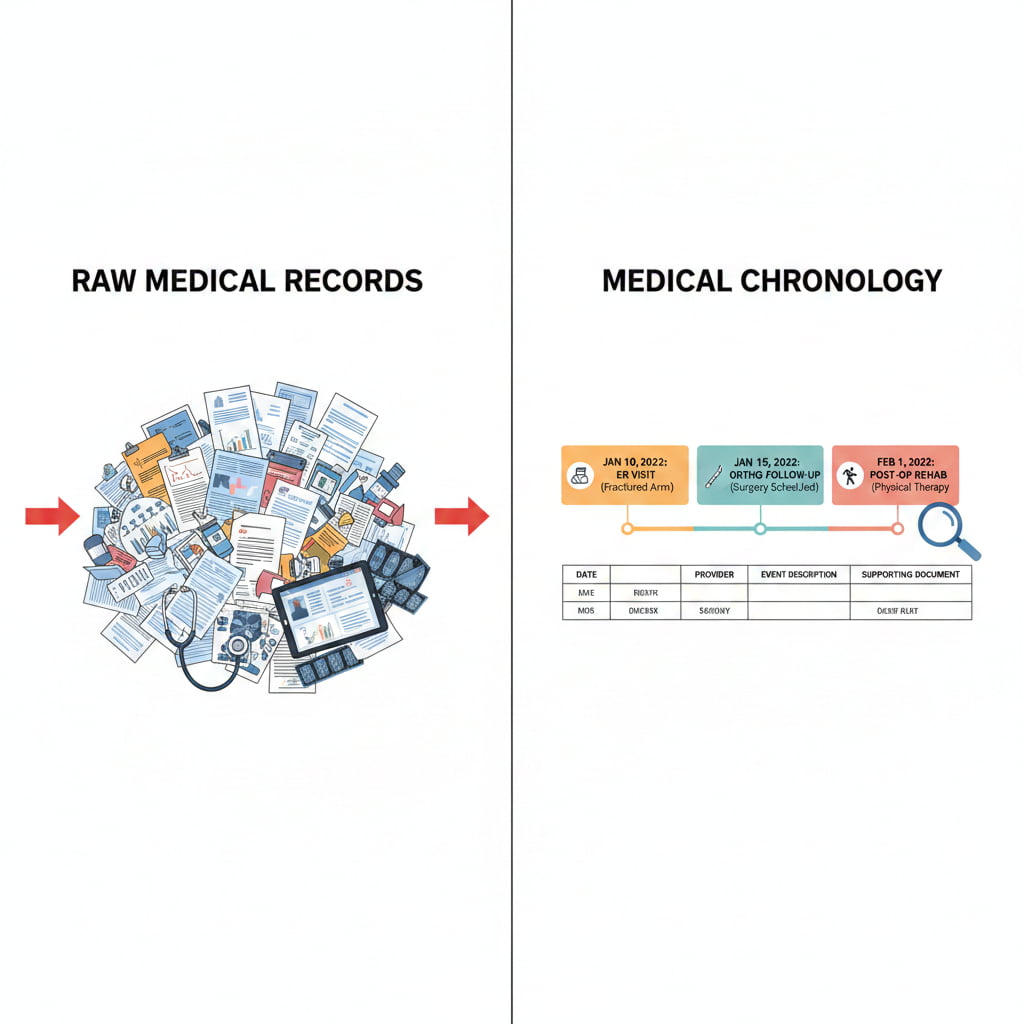
A medical chronology transforms raw records into an organized timeline. It shows when symptoms were reported, how diagnoses were made, and how treatment progressed, allowing attorneys to evaluate causation, damages, and case strategy with confidence.
What a Medical Chronology Provides
A well-prepared chronology outlines each visit, test, diagnosis, and treatment in order. This structure allows legal teams to see how care unfolded, identify relationships between events, and understand what happened without wading through scattered records.
By consolidating timelines, a chronology highlights clinical milestones and turning points, making it easier to spot pivotal changes in care. The result is a reliable, easy-to-follow medical narrative grounded in the source records.
Strengthening Case Clarity Through Structured Timelines
Clear timelines help attorneys analyze sequence and causation. When treatment and symptoms are laid out chronologically, it becomes easier to assess whether care aligns with the alleged injury, identify treatment patterns, and evaluate the strength of claims.
This clarity supports case strategy across personal injury, medical negligence, workplace injury disputes, and mass tort matters. A structured chronology provides a dependable foundation for legal analysis and negotiation.
Supporting Clear Case Storytelling
Litigation often requires attorneys to present a medical history to judges, mediators, or juries. A medical chronology provides a factual framework that supports clear storytelling by presenting events in a cohesive narrative rather than as isolated records.
When timelines are structured, the medical record becomes accessible and easy to follow, keeping the focus on the medical facts and reinforcing credibility.

Improving Efficiency in Case Preparation
Reviewing unorganized records is time-intensive. Chronologies improve efficiency by organizing information before case preparation begins. Attorneys can reference key dates, providers, and treatment milestones quickly, speeding up evaluation and preparation.
Professional medical record review services help law firms manage large volumes of records while maintaining accuracy and consistency.
Enhancing Collaboration Across Legal Teams
Shared timelines keep attorneys, paralegals, and case managers aligned on the same set of facts. This reduces repeated review, streamlines communication, and supports coordinated strategy development.
Consistent documentation strengthens teamwork by ensuring everyone references the same chronology throughout the case.
Integrating Medical Insight Into Legal Strategy
Chronologies are most effective when they reflect clinical context. Medical reviewers can identify significant events, treatment patterns, gaps in care, and missing records that may impact legal analysis.
Clinical oversight ensures accuracy and clarity, helping legal teams rely on the chronology for informed strategy decisions.
How Medilenz Supports Case Strategy Through Medical Timelines
Medilenz partners with attorneys to transform complex medical records into structured chronologies designed for legal use. Its proprietary AI software can sift through thousands of pages and produce a medical summary in hours, while a team of 130+ MD physicians validates the output and adds deep medical insight.
This technology-driven process provides legally focused timelines while preserving clinical accuracy. Medilenz supports personal injury, medical malpractice, workers' compensation, mass tort, and other complex medical cases.

Conclusion: Strengthening Legal Strategy with Medical Chronologies
Medical chronologies strengthen legal strategy by turning complex records into clear, sequential timelines. This structure improves case analysis, storytelling, and collaboration while keeping the focus on objective medical facts.
When timelines are accurate and well-organized, attorneys gain the clarity they need to evaluate claims and prepare persuasive arguments. With support from medical record review providers like Medilenz, legal teams can rely on dependable chronologies that help them move quickly and confidently.