Medical Record Review — Manual vs. Automated vs. Hybrid Review: Which Model Should Law Firms Choose and When
Law firms reviewing medical records aim to turn complex records into a clear medical story that supports litigation decisions. The key decision is choosing a review model that balances speed, structure, and clinical judgment based on case needs.
Introduction
Understanding how different review models work helps legal teams select the right approach for the case, the litigation stage, and the level of medical interpretation required.
Understanding the three medical record review models
Law firms handling personal injury, medical malpractice, workers' compensation, and mass tort matters generally choose one of three review models:
- Manual review.
- Automated review.
- Hybrid review (AI technology plus physicians' insights).
Each model serves a purpose. The key is matching the model to the case, the stage of litigation, and how much clinical judgment the matter requires.
Manual review: when tailored narrative matters most
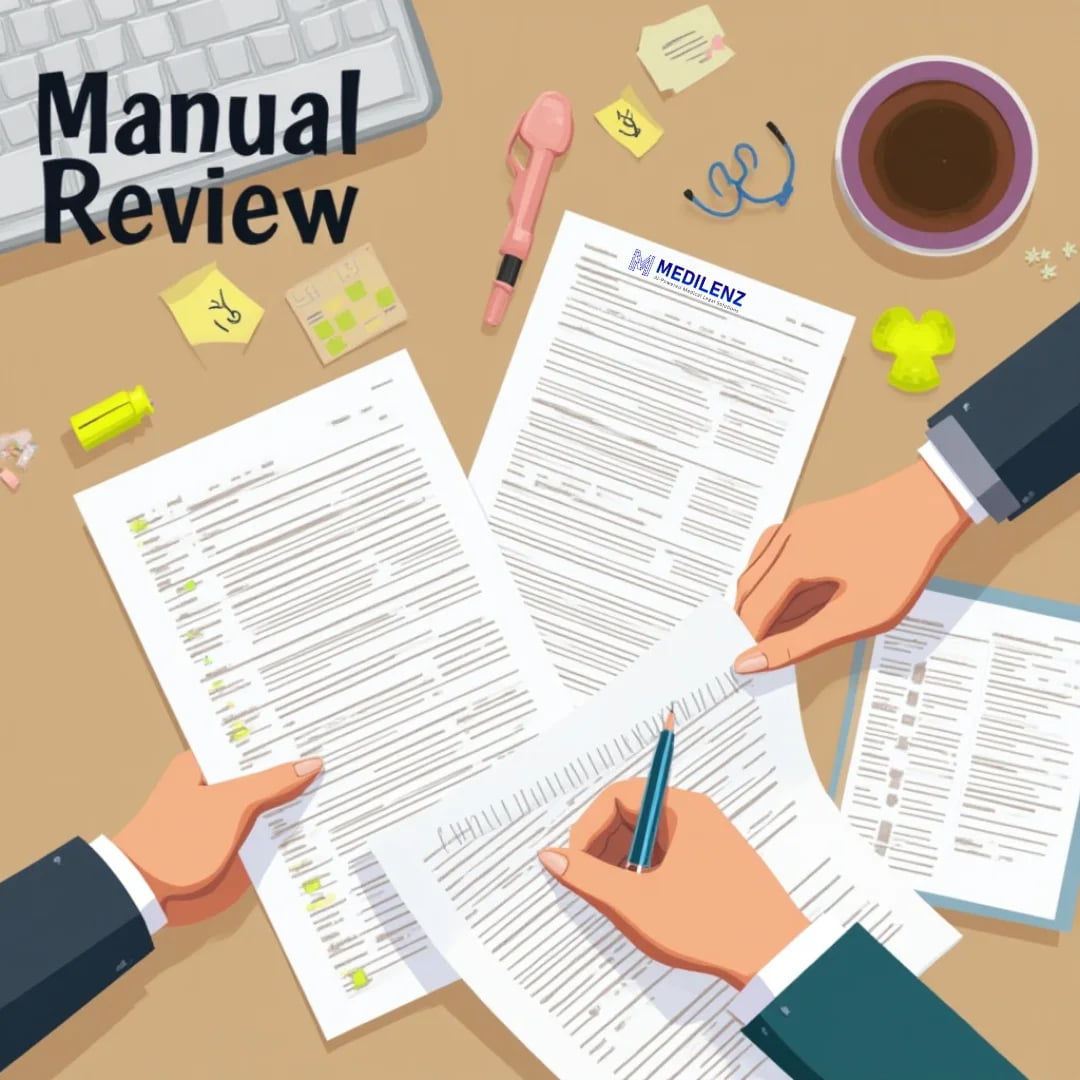
Manual review involves experienced reviewers reading records closely and preparing litigation-ready deliverables such as medical chronologies, summaries, demand letters, life care plans, and expert medical opinions with clear citations. The primary value lies in customization.
This approach works well when:
- The volume of records is manageable.
- The treatment story includes meaningful clinical decisions.
- The legal team wants a narrative shaped around case themes.
When treatment spans multiple providers or phases, manual review clarifies how the story unfolds. It supports expert discussions, mediation materials, and deposition preparation with a coherent timeline that reads like it was prepared for the case.
Automated review: when speed and structure are the priority
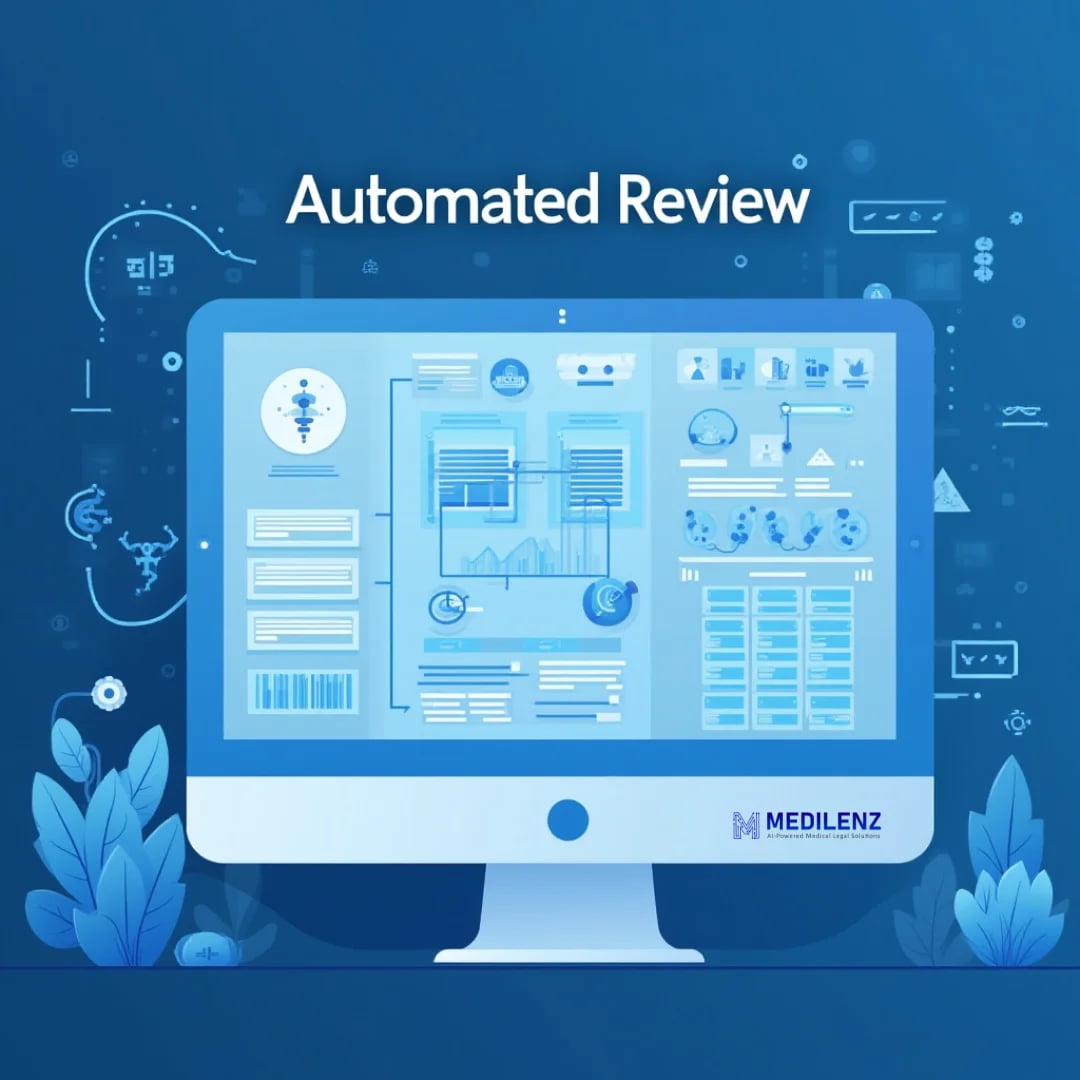
Automated review uses technology to extract and organize encounter dates, providers, facilities, diagnoses, medications, and procedures. This model is often used when teams need fast organization and consistent formatting.
It can be especially useful early in a case, when teams want a quick view of treatment flow, key imaging dates, and major care events before deciding if deeper clinical interpretation is needed.
Hybrid review (AI technology plus physicians' insights): combining efficiency with medical context

Hybrid review blends technology-driven organization with physicians' insights. This model works well when records are lengthy, involve multiple providers, or span extended treatment periods.
Hybrid review remains practical across multiple litigation stages, from early organization through discovery, mediation, and trial preparation. It is especially useful in mass tort cases where firms want consistent structure across large dockets while preserving the medical nuance unique to each claimant.
Choosing the right review model in real litigation workflow
Many firms choose review models based on where the case stands and what the team needs at a given stage.
- At intake: automated review for fast organization, hybrid review when early medical context is helpful.
- During discovery: hybrid review for long or multi-facility records, manual review for targeted narratives.
- For depositions, mediation, and expert review:hybrid review for consistency and readability, manual review for tailored presentation.
- During trial preparation: hybrid review for clean, verifiable timelines, manual review for refined narrative focus.
How Medilenz supports these review models
Medilenz delivers litigation-ready medical chronologies, summaries, demand letters, life care plans, expert medical opinions, and more, designed for real litigation workflows.
Medilenz deliverables support practical workflow moments, including:
- Preparing deposition outlines with clear, dated sequences.
- Organizing mediation narratives that are easy to follow.
- Supporting expert review with reliable record citations.
- Keeping large medical files readable across attorneys, paralegals, and case managers.
Medilenz supports multiple case types, including personal injury, medical malpractice, workers' compensation, and mass tort matters.
Closing takeaway
When the review model aligns with the case and litigation stage, medical records become easier to work with and legal teams gain a narrative that supports confident decision-making from intake through trial preparation.