Why Insurers Settle Faster When the Medical Story in Your Demand Letter Is Airtight
In complex injury cases, a well-crafted demand letter is far more than a list of injuries and bills. It is a strategic medical narrative that links the incident to the injuries and supports the claimed damages.
When the narrative is reinforced with accurate ICD-10 codes for diagnoses and CPT codes for procedures, insurers can validate the medical basis of the claim faster. Clear medical facts allow adjusters and mediators to focus on valuation rather than verification.
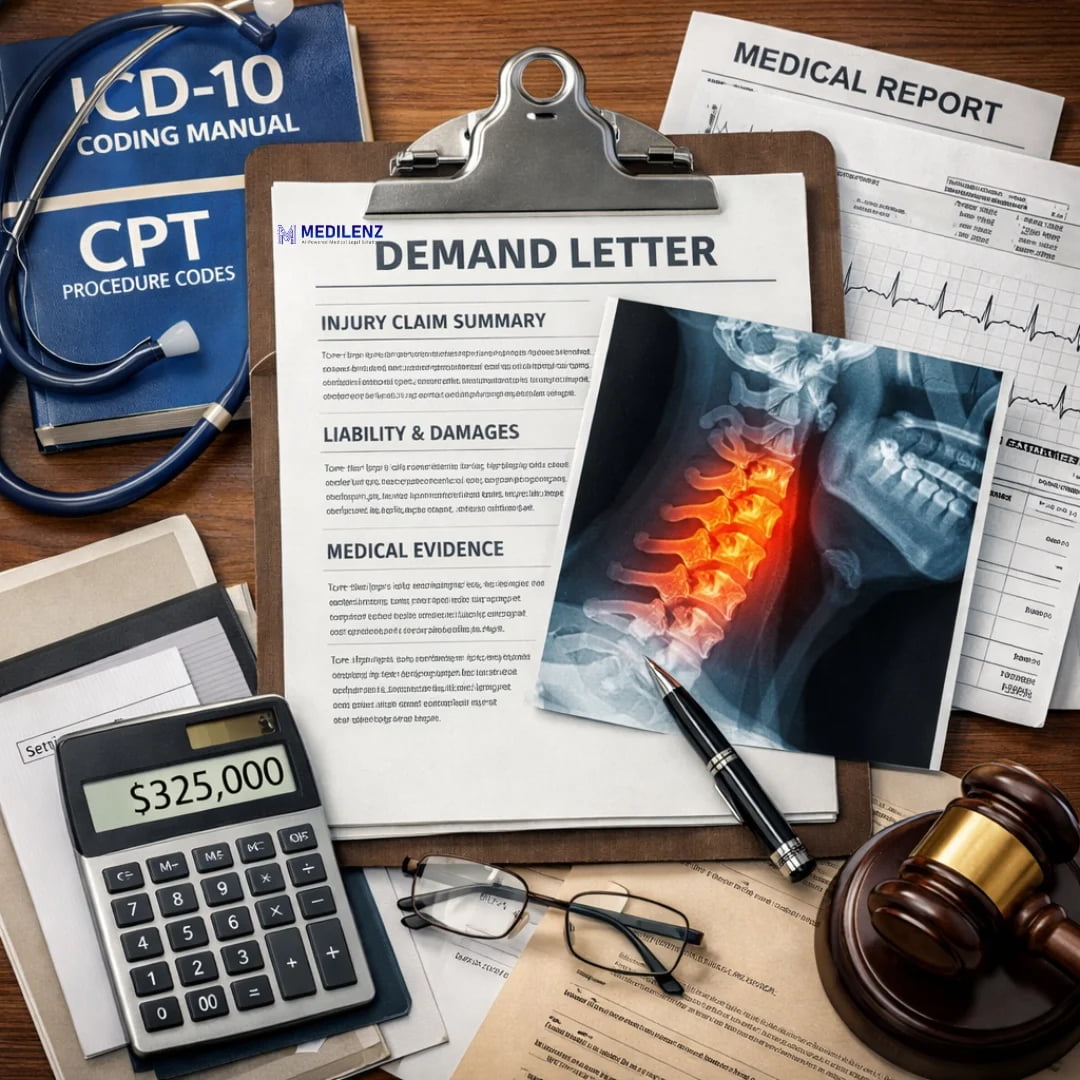
Transforming medical records into a clear and persuasive narrative
Source medical records are often vast, disorganized, and written for clinicians, not legal audiences. Structured medical record review converts those records into a coherent treatment narrative that supports settlement value.
The first step is a chronological review, effectively building a medical chronology so the injury story is easy to follow. Timelines show when symptoms were reported, how diagnoses were made, and how treatment progressed, which makes the demand letter itself flow naturally.
By converting voluminous records into a narrative timeline, the review process highlights valuation drivers without overwhelming the reader. Aligning diagnoses with ICD-10 codes and linking procedures to CPT codes reinforces medical necessity and billing accuracy.
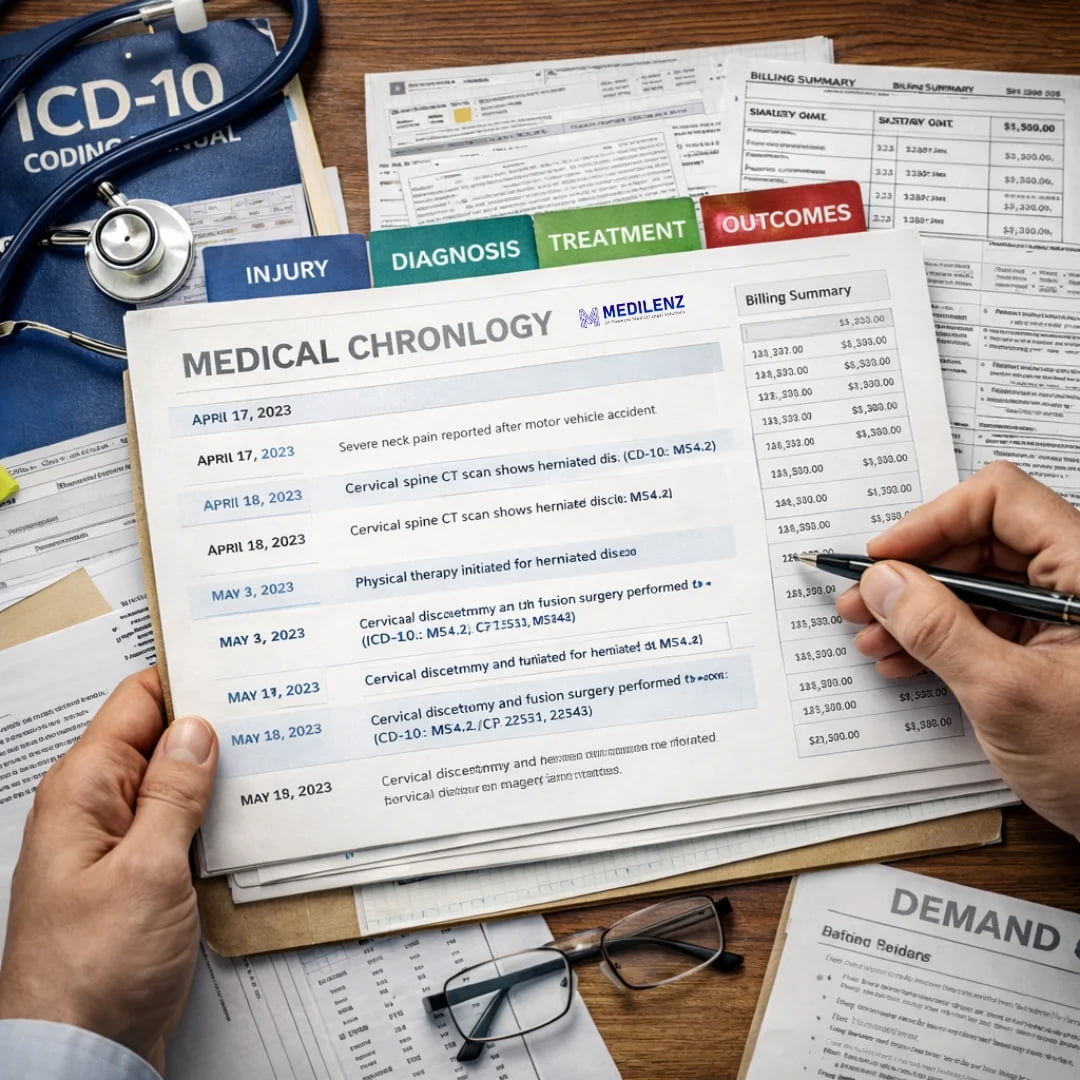
Key components of the narrative
Each diagnosis should be explained using standardized ICD-10 codes, while major treatments tie medical findings directly to cost drivers and claimed damages. This coding alignment helps insurers quickly verify that treatments correspond to accepted clinical standards.
Strong narratives highlight initial evaluations, diagnostic findings, treatment progression, significant changes in care, and outcomes that impact valuation. The goal is a clear story of injury and recovery, not a confusing pile of records.
Linking diagnoses, progression, and causation
Beyond the timeline, the demand letter must make cause-and-effect unmistakable. A persuasive demand explicitly connects the incident to the diagnosis and explains how symptoms evolved over time. ICD-10 codes clarify the nature and severity of each injury, strengthening causation arguments.
By linking the incident, diagnoses, and treatment course, the narrative minimizes uncertainty. This logical continuity is what makes the medical story compelling and persuasive.
Projecting future care and quantifying damages
Demand letters should incorporate future medical needs into the narrative to emphasize long-term impact. Attorneys often include projected therapy, surgeries, medications, or assistive devices to support higher damage claims.
Future care projections gain credibility when anticipated treatments are supported by existing ICD-10 codes and mapped to expected CPT codes. Clear projections also reinforce non-economic damages by illustrating how injuries continue to disrupt daily life.
Consistency, completeness, and credibility
Consistency enhances credibility. Treatment dates, provider names, ICD-10 codes, CPT codes, and cost figures must align with the records. Even small discrepancies can invite objections and valuation disputes.
Completeness matters just as much. Missing imaging reports, operative notes, or therapy records weaken negotiations. A reconciled record set signals stability and preparedness.
Beyond personal injury: malpractice, workers' comp, mass torts
The same narrative principles apply across litigation types. In malpractice claims, ICD-10 codes define resulting injuries while CPT codes identify the procedures at issue. In workers' compensation, coding links workplace incidents to treatment pathways. Mass tort cases demand consistent coding across long timelines and multiple providers.
Across all contexts, clear medical narratives supported by standardized codes explain causation, damages, and long-term impact in a way that supports resolution.
Streamlining with Medilenz
Drafting settlement-ready demand letters is time-intensive. Medilenz supports attorneys with comprehensive demand letters that include structured treatment summaries, timelines, narrative reports, and future cost needs tailored to each case.
Through advanced technology and physician-led review, Medilenz identifies key ICD-10 codes, validates CPT codes, and aligns them with clinical findings and valuation drivers. This lets legal teams focus on negotiation strategy rather than manual review.

Conclusion
A demand letter that settles tells a complete and credible medical story. By connecting diagnoses to the incident, tracing treatment progression, and incorporating future care, attorneys strengthen valuation arguments.
Clear, consistent narratives backed by ICD-10 and CPT alignment reduce uncertainty, reinforce credibility, and drive stronger settlement outcomes.