Medical Chronology: How to Build a Timeline That Attorneys Can Trust
A strong medical chronology is one of the most useful tools in a litigation file. It helps attorneys see the treatment story clearly, verify details quickly, and make decisions with confidence across liability, causation, and damages.
Introduction
An ill-prepared chronology can look organized while still creating challenges if critical details are unclear. When encounter dates do not align, transitions in care are missing, or the timeline does not reflect the record accurately, attorneys spend time verifying details rather than focusing on case strategy.
Below is what separates a chronology that holds up from one that creates friction later, with practical ways to address conflicts, gaps, and pre-existing conditions.
What a chronology is supposed to do, in plain terms
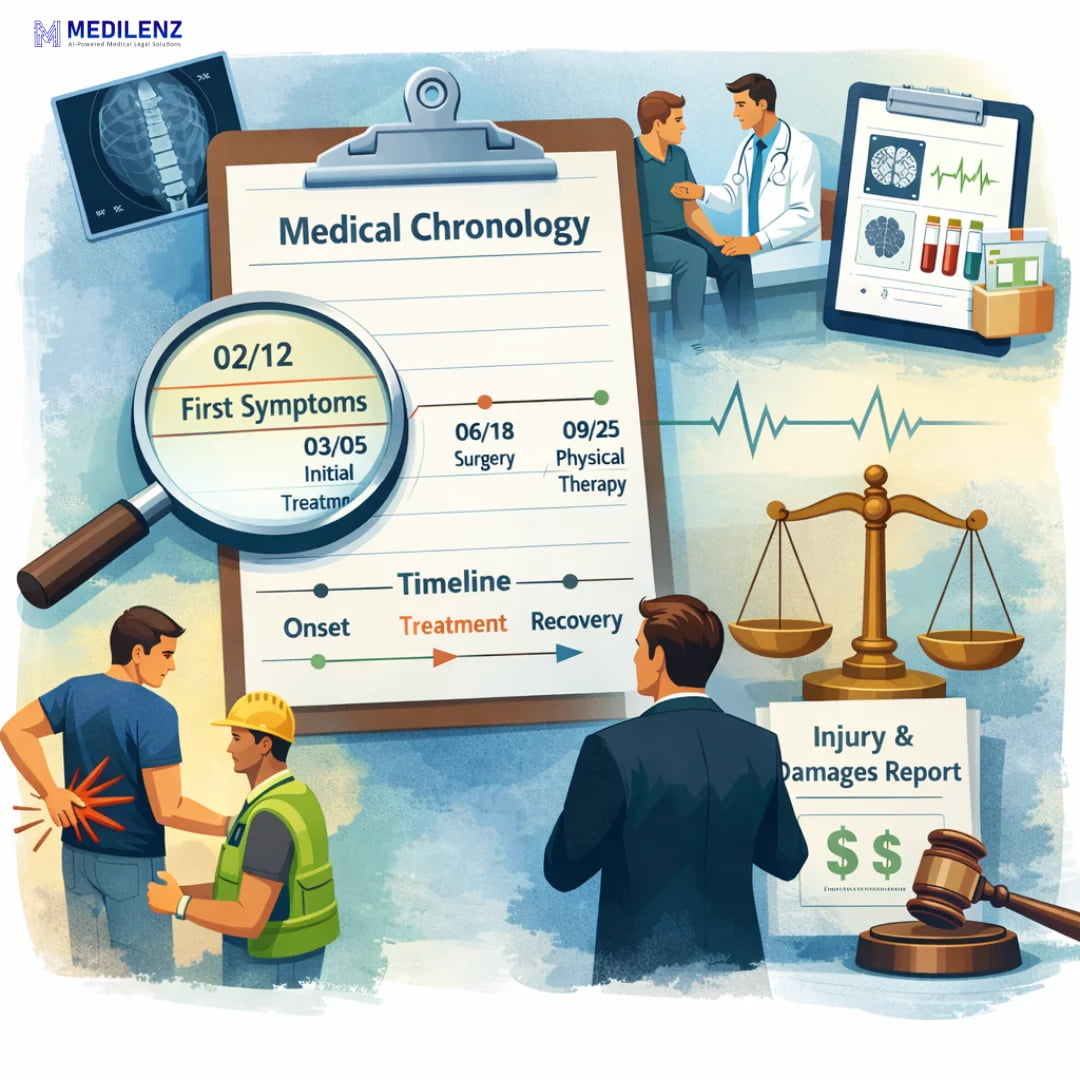
A reliable medical chronology helps attorneys understand the medical story quickly and with confidence. At a glance, the timeline should make it easy to identify:
- When symptoms first appear in the record.
- What care occurred next, and why.
- How treatment progressed over time.
- What diagnostics support the clinical story.
- Where function and work status change.
- How the record reflects progression tied to causation and damages.
When an attorney can follow the story in one pass, the chronology is doing its job.
The building blocks of a chronology that attorneys can trust
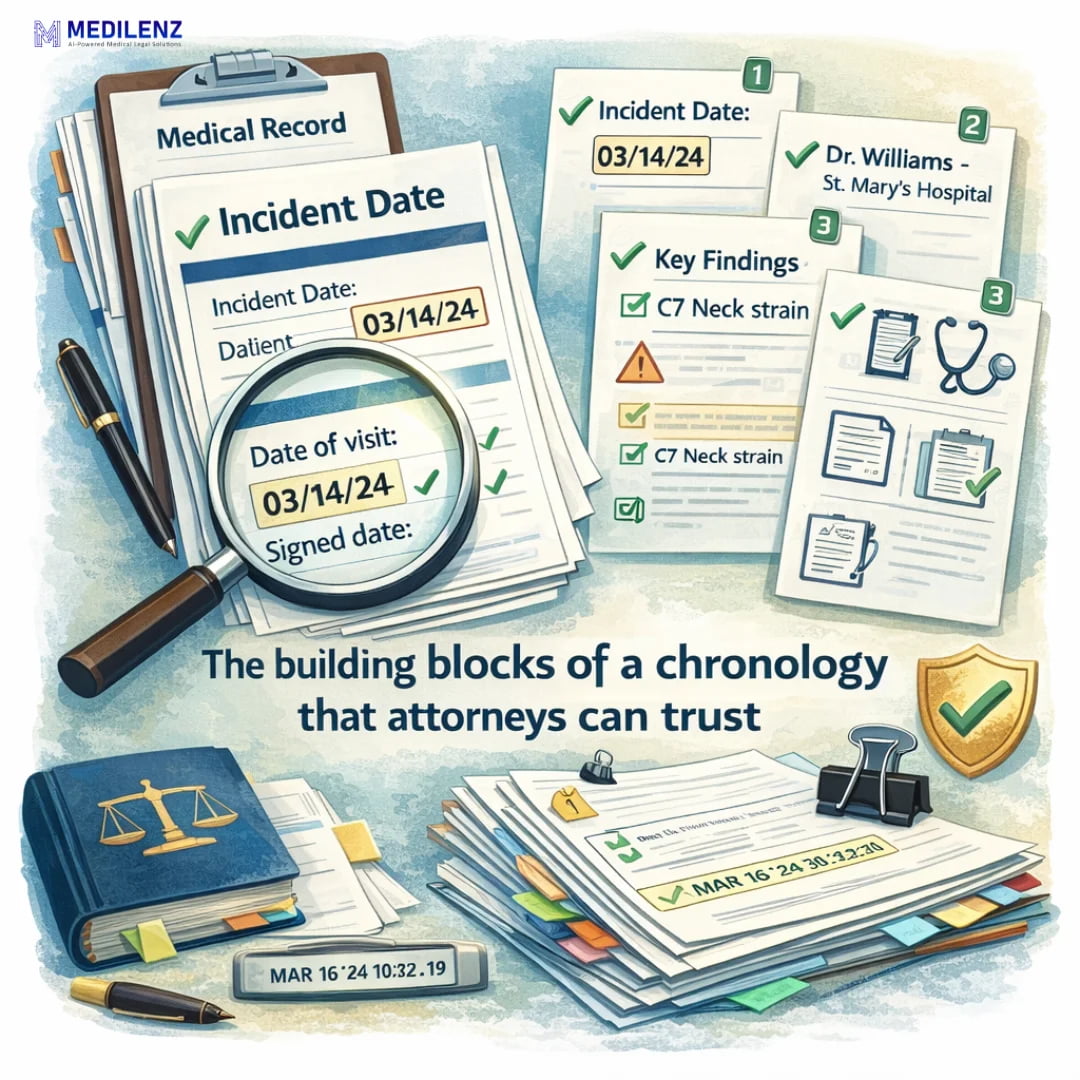
Dates that are accurate and consistent
Date accuracy is the foundation of a chronology that attorneys can rely on. Chronologies are used for depositions, mediation briefs, expert review, and trial preparation. When dates are inconsistent, the entire timeline becomes less trustworthy.
A strong chronology keeps these elements consistent and clear:
- Incident date.
- Facility and provider.
- Reason for visit.
- Key findings and diagnoses.
- Treatment and plan.
- Clear citations for fast reference.
When multiple date fields exist (created, visit, signed), anchor the chronology to the actual encounter date while preserving record clarity.
A clear “first complaint” trail
In personal injury matters, the first documented complaint is a critical timing marker for causation analysis. A reliable chronology makes it easy to spot:
- The first documented symptom report.
- The first clinical evaluation following the incident.
- The first specialist involvement, if applicable.
- The first imaging or diagnostic step.
Visit notes that focus on what changed
A useful chronology is not a page-by-page reproduction. It highlights meaningful clinical developments so attorneys can track what changed without digging through every note.
- Symptom progression.
- New or updated diagnoses.
- Changes in treatment plans.
- Referrals, procedures, or therapy milestones.
- Diagnostic results and impressions.
- Functional limitations when documented.
How to handle the issues that make chronologies unreliable
Conflicting entries and inconsistent documentation
Differences across providers are common. A well-prepared chronology presents conflicts clearly and with citations so attorneys can assess the progression.
- Record what each provider documented, with citations.
- Track symptom evolution over time rather than isolated notes.
- Present differences as part of a progression.
Gaps in care that interrupt the timeline
Gaps in care do not automatically weaken a case, but they raise timeline questions that benefit from context.
- Clearly mark where gaps occur.
- Capture what the record shows before and after the gap.
A reliable chronology makes it obvious where the gap sits in the story, helping attorneys decide how to present the narrative.
Pre-existing conditions and baseline versus change
Many records include pre-existing conditions. The key is distinguishing baseline from post-incident change.
- Relevant prior history with dates.
- Periods of stability when treatment was minimal.
- The first documented post-incident change in symptoms or function.
- Treatment escalation patterns after the change.
This is where chronologies become more than timelines.
Delayed diagnostics and timing clarity
Imaging and diagnostics are not always ordered immediately. Strong chronologies help attorneys understand the timing and clinical context.
- When diagnostics were ordered.
- Why they were ordered.
- Results, stated clearly.
- How subsequent treatment connects to findings.
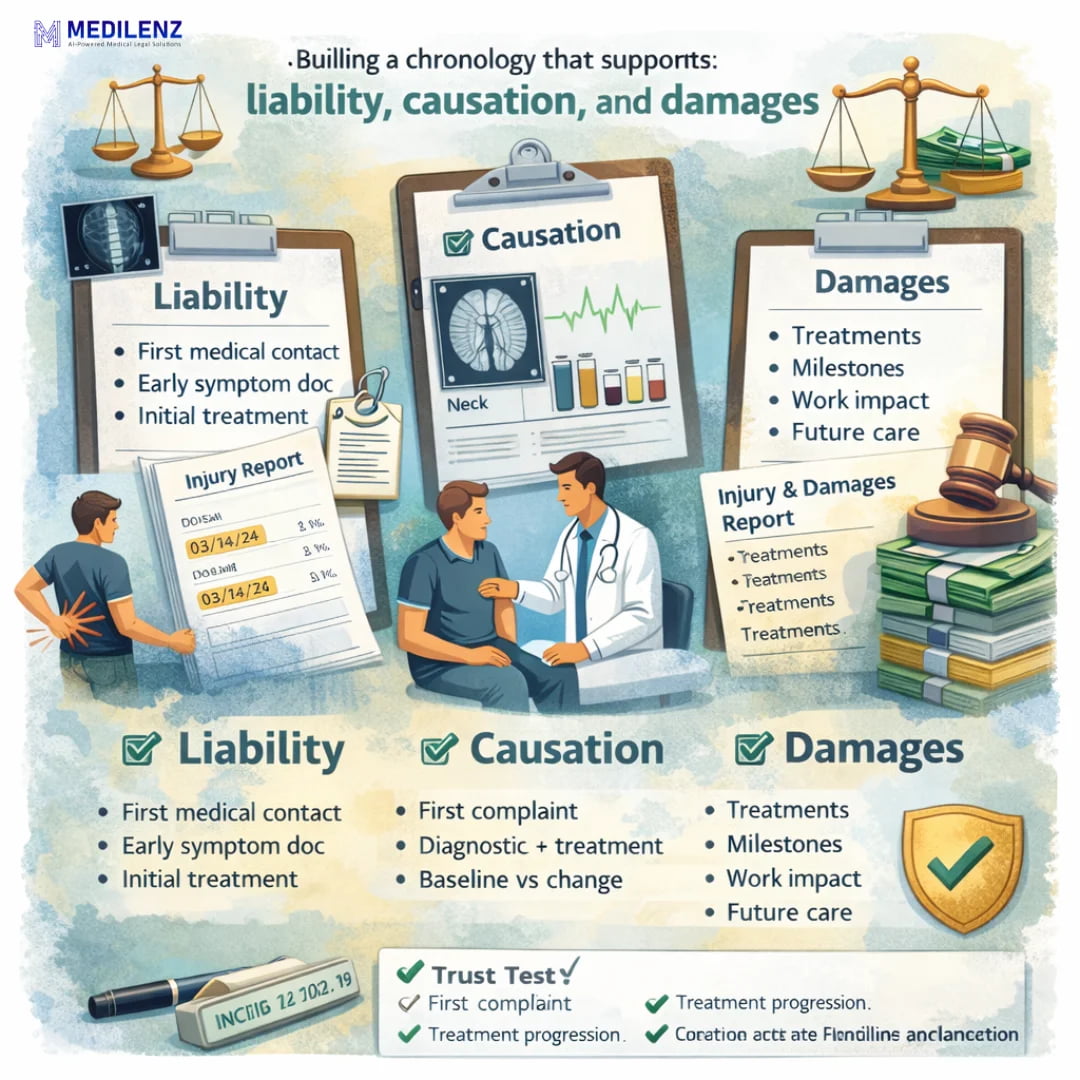
Building a chronology that supports liability, causation, and damages
A chronology supports litigation themes when it makes these three areas easy to track.
Liability support
- The first post-incident medical contact.
- Early symptom documentation.
- Early treatment decisions and follow-up patterns.
Causation support
- The first documented complaint and progression.
- The sequence of diagnostics and treatment decisions.
- Escalation patterns that match documented symptoms.
- Baseline versus change when prior history exists.
Damage claims support
- Treatment frequency and duration.
- Therapy progression milestones.
- Procedures and referrals.
- Functional impact and work status when documented.
- Future care recommendations when present in the records.
When these elements are visible in the timeline, attorneys can work more efficiently and present the medical story more clearly.
A practical “trust test” attorneys can use
Before relying on a chronology, attorneys often look for clear indicators that the timeline can be trusted:
- The first documented complaint.
- Treatment progression without opening every note.
- Consistent and easy-to-follow dates.
- Diagnostics aligned with clinical changes.
- Clear baseline versus post-incident distinction.
- Functional limitations and working capacity post-incident.
How Medilenz helps legal teams build chronologies they can trust
Law firms need chronologies that are clean, consistent, and practical for litigation workflows. Medilenz delivers structured timelines and focused medical summaries that help attorneys handle medical-legal cases confidently from intake through trial preparation.
- Organizing records into a clear, date-based timeline.
- Highlighting key diagnostics and treatment progression.
- Supporting baseline versus change analysis when prior history exists.
- Keeping outputs consistent across personal injury, medical malpractice, workers' compensation, and mass tort matters.
- Making records easier to reference across attorneys, paralegals, and case managers.
Closing thought
A medical chronology that holds up is more than organized; it is litigation-ready. Accuracy, clarity, and structured medical storytelling allow attorneys to work efficiently and present medical facts with confidence.
When built around real litigation needs, a chronology becomes a dependable tool that outlines liability, causation, and damages from intake through trial preparation.