Medical Summaries for Trial Attorneys: What to Include and What to Leave Out
The volume and complexity of medical records in litigation can be overwhelming for trial attorneys. A well-crafted medical summary turns voluminous records into a clear narrative, organizing injuries, treatments, and outcomes into a coherent timeline that supports litigation strategy.
Introduction
Medical records often become the cornerstone of case strategy because they document what happened, when it happened, and how the patient responded. A litigation-ready summary highlights key medical facts for personal injury, medical malpractice, workers' compensation, and mass tort cases alike, making evidence accessible and actionable.
Clear, clinically accurate summaries help attorneys identify strengths, weaknesses, and causation issues early in the case lifecycle, improving preparation and negotiation outcomes.
Key Components of a Litigation-Ready Medical Summary
A litigation-ready summary is thorough yet focused, presenting the medically relevant facts in a structured format that is easy to verify. Key elements typically include:
- Chronology and key events: A clear timeline that links the incident to reported injuries, symptoms, diagnoses, and treatments.
- Diagnoses and findings: Summaries of confirmed conditions and relevant diagnostic results, including imaging and lab findings tied to the claim.
- Treatments and outcomes: Major interventions, hospitalizations, therapies, and documented responses with dates.
- Provider and facility details: Names and specialties of treating providers and facilities to support follow-up and expert consultation.
- Prognosis and future care: Current condition, long term effects, and anticipated treatment needs relevant to damages.
- Contextual documentation: Select supporting records such as incident reports that reinforce the medical narrative.
- Red flags: Gaps or inconsistencies in care, missing records, or conflicting diagnoses that may need follow-up.
Each component should be presented in objective, plain language and backed by page-level references so attorneys can verify findings quickly.
What to Exclude from a Medical Summary
Completeness does not mean including everything. Irrelevant or repetitive information can obscure the most important facts. Common items to leave out include:
- Unrelated or minor health data: Exclude routine wellness visits or conditions that do not impact the claim.
- Duplicate entries: Avoid repeating identical test results or notes across multiple documents.
- Overly medical jargon: Translate complex terms into plain language to keep the summary accessible.
- Legal arguments or opinions: Keep the summary factual and avoid liability or causation arguments.
- Irrelevant historical data: Minimize unrelated pre-existing conditions and focus on the incident-related care.
Adapting the Summary to the Case Type

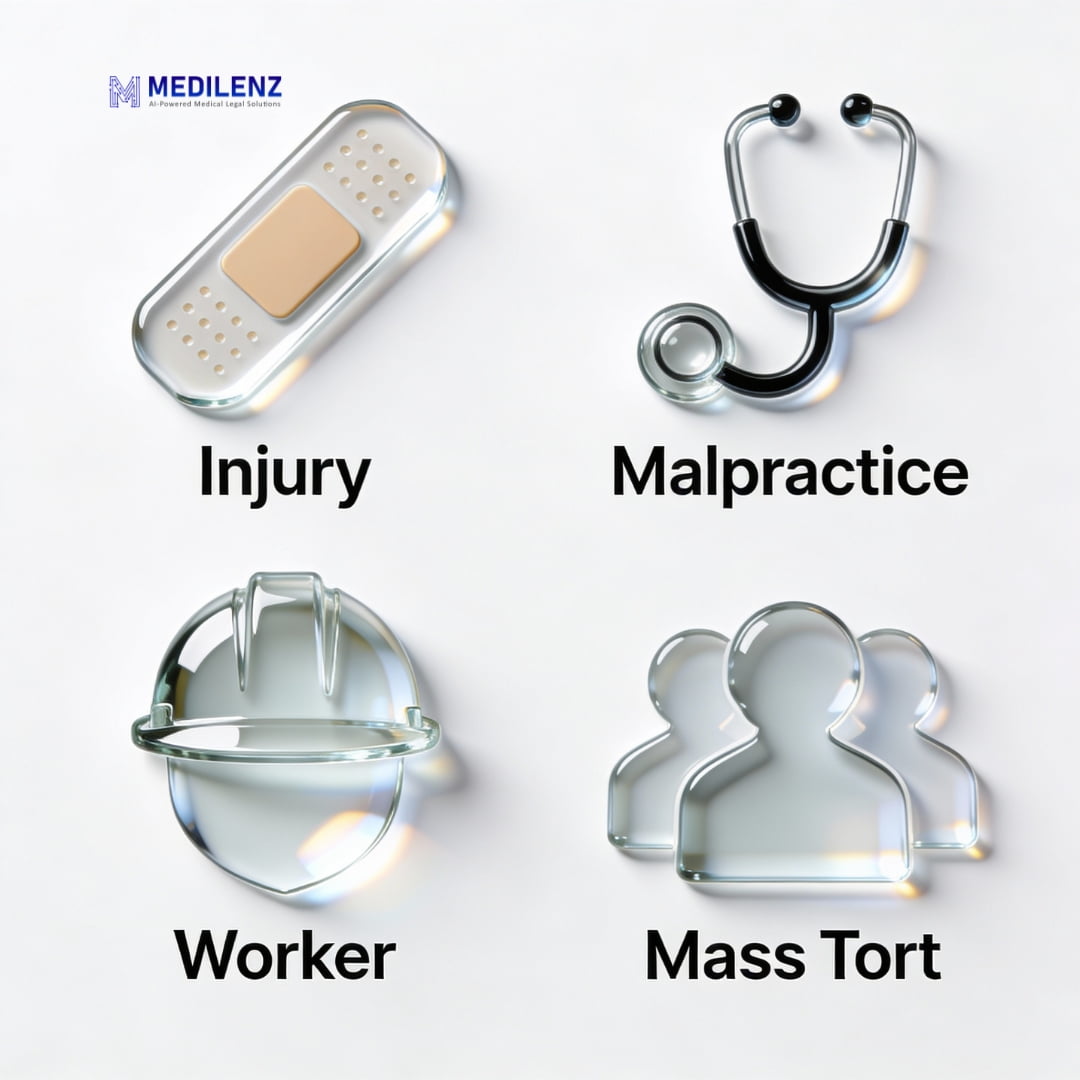
Medical summaries serve different litigation contexts, but the core objective remains the same: isolate claim-related medical facts and present them clearly. Customization by case type helps attorneys focus on the evidence that matters most.
- Personal injury: Emphasize the injury event, emergency care, follow-up treatment, and functional impact.
- Medical malpractice: Highlight provider actions, surgical details, medication orders, and documented complications.
- Workers' compensation: Connect employer incident reports to the first notice of injury and related medical evidence.
- Mass tort: Focus on exposure history, consistent symptom patterns, and relevant testing across claimants.
Leveraging Expert Medical Review

Producing a trial-ready medical summary can be time-consuming. Many firms partner with specialized providers like Medilenz, which combines proprietary AI tools with physician-level review to deliver accurate, defensible summaries faster.
This hybrid approach reduces turnaround time while maintaining the clinical integrity required for trial preparation, expert review, and settlement evaluation.
Conclusion: Clarity and Case Readiness
A litigation-ready medical summary is both thorough and purposeful. It presents only the medically significant facts, structured to highlight causation and damages. By including key diagnoses, treatments, and outcomes and excluding irrelevant details, attorneys gain a clear picture of the client's medical journey.
Whether a case involves personal injury, medical malpractice, workers' compensation, or mass tort litigation, a well-crafted summary gives legal teams the information they need to frame arguments confidently and prepare for trial.